AWARD CATEGORY
Bentley LumenRT, MicroStation, OpenRoads, OpenUtilities, ProjectWise
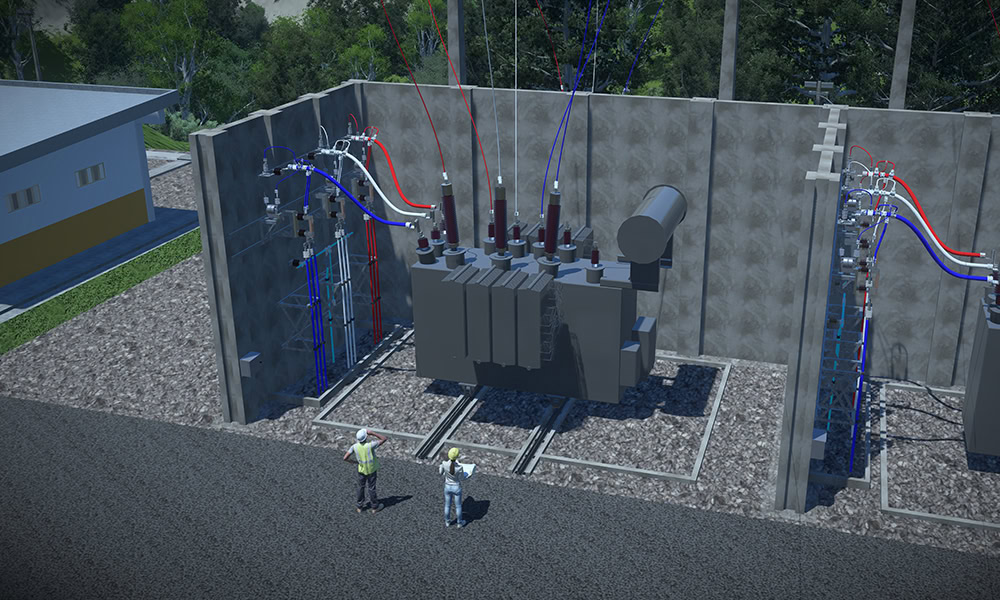
Committed to advancing technology to provide sustainable energy solutions and increase the productivity and efficiency of design and construction teams, COPEL Distribuição piloted collaborative BIM modeling for one of their 138-kilovolt substation projects. The project required automating deliverables and integrating physical substation design with electrical design, as well as ensuring compatibility with other software applications used within the company. After careful analysis, COPEL selected OpenUtilities Substation based on its interoperability with ProjectWise and MicroStation, which were already used by the company due to its ability to model the substation structure and electrical designs within one application. Extrapolating their results over a period of one year for 15 substation projects of 138 kilovolts, COPEL estimated a 30% reduction in project costs—an annual savings of USD 630,000. Using Bentley software facilitated real-time information sharing, streamlined multidiscipline design workflows, and ensured accurate material quantity takeoffs, avoiding rework and waste. The successful digitization of the pilot project ensures that future projects will be executed more quickly and sustainably, with better use of human and material resources.