AWARD CATEGORY
OpenFlows WaterGEMS
The city of Joinville experienced their worst water crisis in 30 years. Responsible for supplying water and sanitation services to approximately 600,000 residents in the municipality, Companhia Águas de Joinville initiated a project to develop a contingency plan to maintain water supply during worsening drought conditions. They evaluated three alternatives in the preliminary study. However, their initial solution yielded insufficient flow transfer, water shortages at the weakest points in the supply system, and a reduction in water transport efficiency. As a result, they needed to implement a more comprehensive study of the municipality’s entire network.
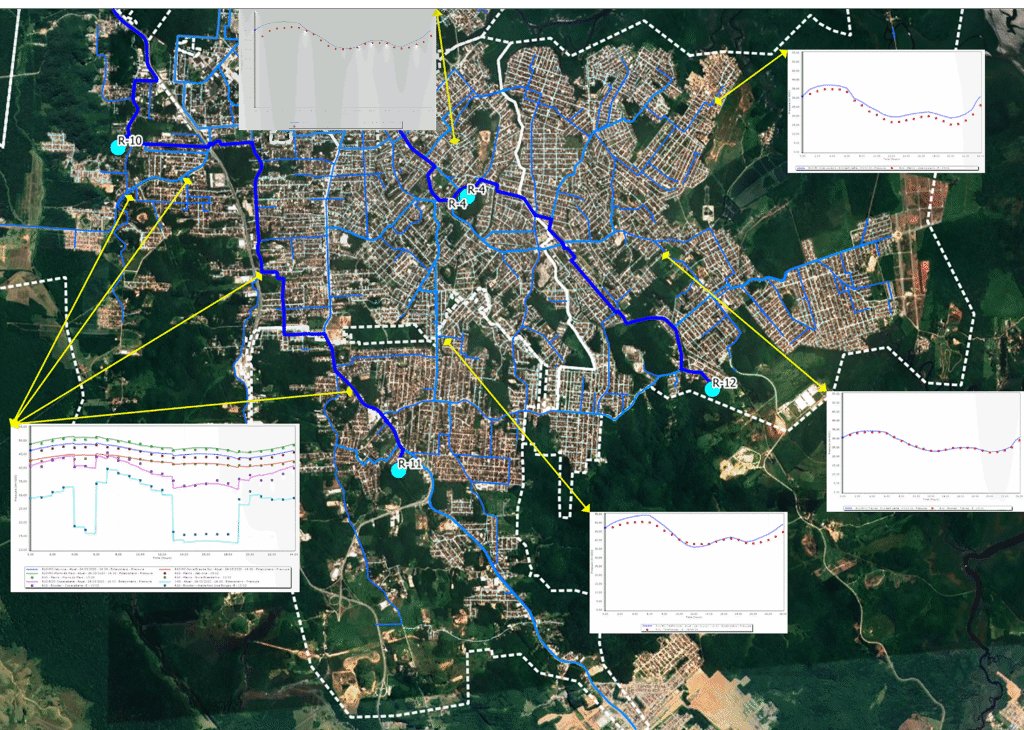
Companhia Águas de Joinville used OpenFlows WaterGEMS to create a digital twin of the distribution system, modeling 285 kilometers of network. Using the hydraulic model to simulate a new contingency plan, they determined an optimal solution that guaranteed supply in the event of severe drought, while saving approximately BRL 4.5 million compared to their original proposal. The Bentley-based scenario improves flow efficiency, reduces pumping costs, and cuts energy consumption by 574 megawatts per year.