AWARD CATEGORY
Bentley LumenRT, iTwin Capture, MicroStation, OpenPlant, OpenRoads, ProjectWise, ProStructures, STAAD, SYNCHRO, Other (OpenBuildings, Bentley Raceway & Cable Management)
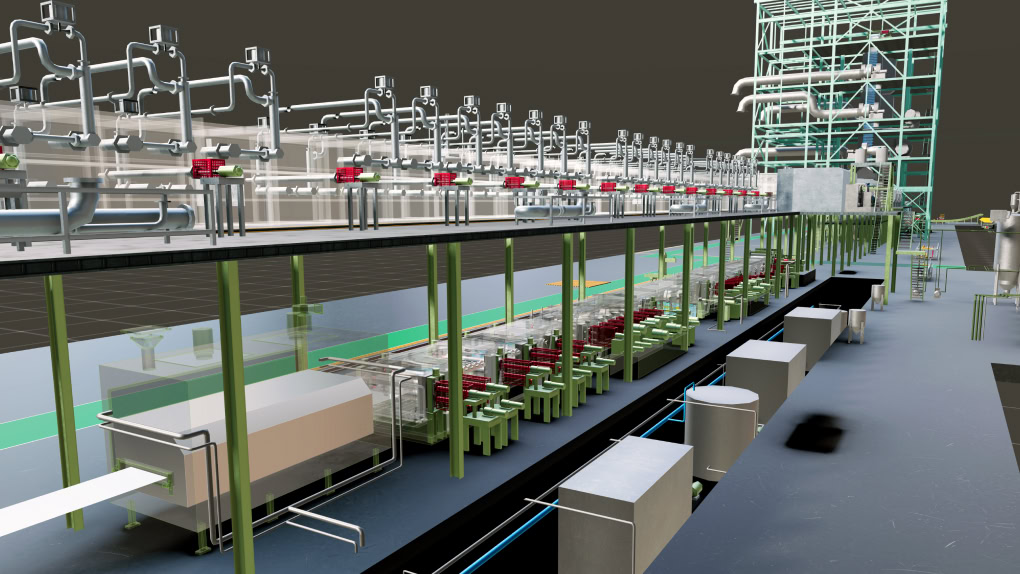
Baosteel Engineering delivered this iron and steel plant in Baoshan as an intelligent, green facility with an annual capacity of 310,000 tons. The project required digital reconstruction of historical site data, multidiscipline coordination, and the integration of digital twins for predictive maintenance. Faced with these challenges on a tight six-month delivery timeline, Baosteel realized that they needed comprehensive, interoperable 3D modeling, analysis, and digital twin technology.
Leveraging Bentley ProjectWise, iTwin Capture, and Bentley Open applications, Baosteel established a connected data environment and digital twin, reducing collision rates by 9%, as well as shortening the design cycle by 50% and construction period by 92 days. The integrated digital solution decreased costs associated with rework by a total of CNY 20 million. Using the digital twin contributed to an 8% reduction in energy consumption per ton of steel and reduces annual carbon emissions by 12,000 tons, driving low-carbon transformation of the metallurgy sector.