AWARD CATEGORY
Bentley Descartes, Cesium, iTwin Capture, OpenCities Map
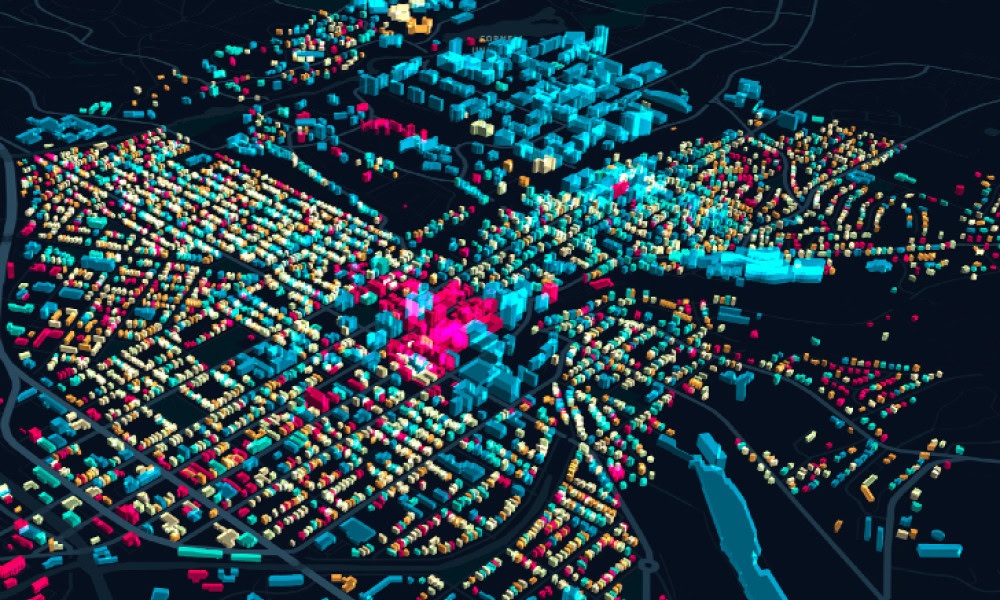
Led by Environmental Systems Lab at Cornell University, Energy Atlas supports the City of Ithaca’s commitment to full carbon neutrality by 2030. The digital twin project facilitates scenario-based simulations to evaluate building energy efficiency and resilience for city-wide carbon reduction planning. Faced with 3D reconstruction, data interoperability, and model deployment challenges when creating an urban building energy model for more than 5,200 city buildings, Cornell needed an integrated and interactive technology platform to digitize assets, processes, and decision frameworks.
Leveraging Bentley iTwin Capture and Cesium, Cornell developed a high-resolution, interactive 3D digital twin, allowing stakeholders to virtually navigate the city, compare energy baselines, and evaluate retrofit options for cost and energy savings, and carbon reductions. Working in an immersive digital environment saved more than 14,000 work hours developing strategies to reduce operational carbon by 104,000 metric tons across Ithaca’s buildings. The digital twin provides a reusable foundation for urban sustainability transition in the United States and around the world.