AWARD CATEGORY
Bentley LumenRT, iTwin, iTwin Capture, MicroStation, OpenBridge, OpenRoads, OpenTunnel, PLAXIS, ProjectWise, SYNCHRO
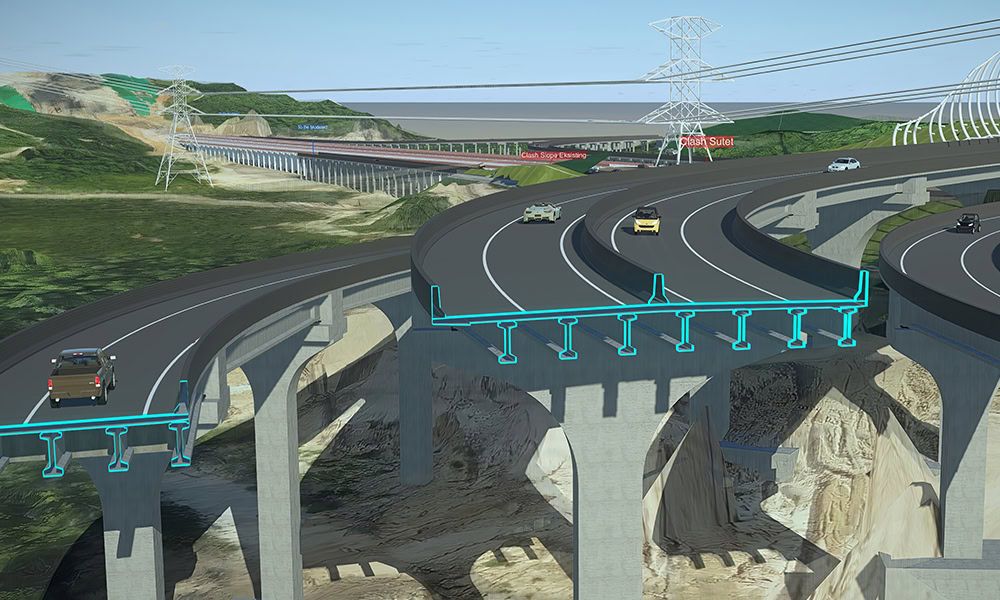
As part of moving Indonesia’s capital city to Nusantara, PT Wijaya Karya (WIKA) was tasked with constructing 57 kilometers of toll road, three long-span bridges, two helipads, two toll gates, and a seven-kilometer pile slab. When complete, the project will reduce travel time from two hours to 30 minutes. However, WIKA had to ensure that the roadway could withstand landslides while avoiding 10 transmission towers. To overcome these challenges, as well as orchestrate 33 work packages simultaneously, WIKA needed digital twin workflows.WIKA used iTwin Capture Modeler to process 500 hectares of aerial survey data, then used OpenRoads to design the roadway and OpenBridge to manage the massive amount of structural data. By using iTwin Capture, the team increased the speed, accuracy, and consistency of processed data by 100%. Bentley’s civil applications helped iterate design alternatives by 35% and increased the safety factor by 0.231, fulfilling the safety requirement. Not only did they save 667,708 working hours, they also reduced their carbon emissions by 51,000 tons.