Categories and finalists

The work that moves the industry forward. Each project proof of what’s possible when technology is applied with ingenuity.

How finalists are chosen

Every year, hundreds of projects are nominated from around the world. Independent panels of industry experts select finalists not simply for what they build, but for how they apply technology to solve complex challenges, create measurable impact, and drive movement to digital engineering.

Bridges and tunnels

  • What we’re looking for
– Demonstrate how your use of technology delivered measurable results in planning, design and engineering, or operations and maintenance of bridges and tunnels.  
  • Tools and technology
– Submissions should demonstrate the use of Bentley applications, independently or combined with other software, across the project lifecycle. Eligible software includes iTwin, OpenBridge, OpenRail, OpenRoads, MicroStation, PLAXIS, SYNCHRO, AssetWise, and ProjectWise. Consider strategic use of Bentley software to improve workflows and outcomes, strong interoperability and data integration across project phases and disciplines, effective use of digital twins for design, construction, operation, and maintenance, advanced API use to extend workflows and connect third-party technologies, and the use of virtual or augmented reality for design reviews, stakeholder engagement, and training.  
  • Innovation and differentiation
– Show what made your approach stand out. Consider: unconventional challenges, original thinking in planning, design, construction, or operation, inventive methods tailored to project constraints, and advanced techniques that go beyond standard practice.  
  • Outcomes and efficiency
– Detail how your project improved performance: measurable gains in design time, accuracy, deliverable quality, and productivity, along with cost savings, reduced risk, stronger safety outcomes, and better lifecycle performance through digital tools.  
  • Return on investment
– Provide quantified results: cost savings across energy efficiency, water loss, design, construction, and maintenance, along with time savings, resource optimization, and stronger risk management.  
  • Sustainability and resilience
– Showcase impact on climate adaptation, disaster preparedness, energy savings, carbon reduction, improved resilience, quality of life, and mitigated risk.  
  • Submission requirements
– Include high-quality visuals: images, screenshots, models, simulations, animations, charts, and diagrams. Provide quantitative data where applicable. Show how digital twins and AI advanced project delivery or asset performance. 
Head of Geotechnics, Geology and Hydraulics Department
ETS
Vice President – Director of Design Center of Excellence
JMT
Editor-in-Chief
Engineering News-Record
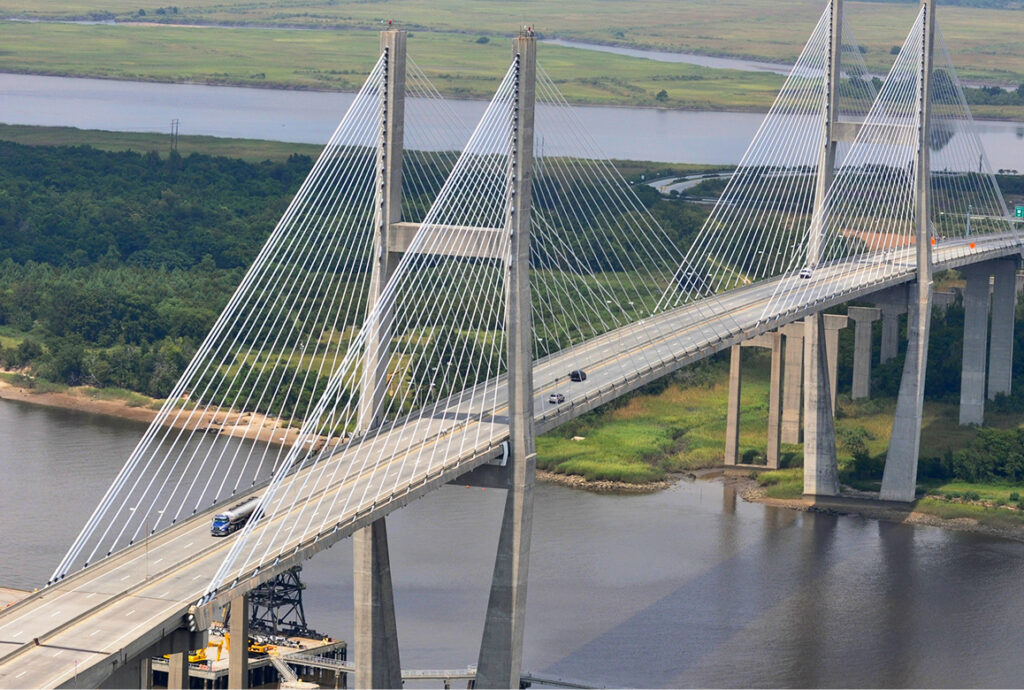
An aerial photograph of the cable-stayed Talmadge Memorial Bridge over the Savannah River, a finalist project by Parsons.

Parsons (on behalf of Georgia Department of Transportation (GDOT))

Talmadge Memorial Bridge: Modernizing a critical Savannah crossing  
Bridges and tunnels
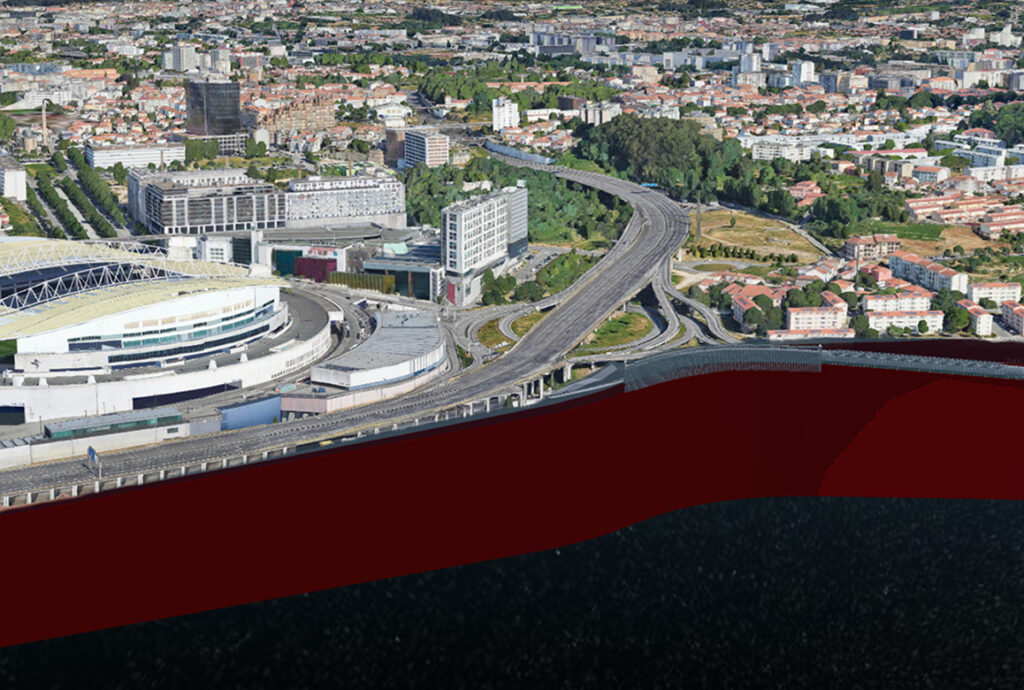
A digital rendering of the Porto Metro tunnel integrated with the cityscape, a finalist project by AYESA Engineering.

AYESA Engineering

Porto Metro 3.0: Optimizing tunnel design at scale
Bridges and tunnels
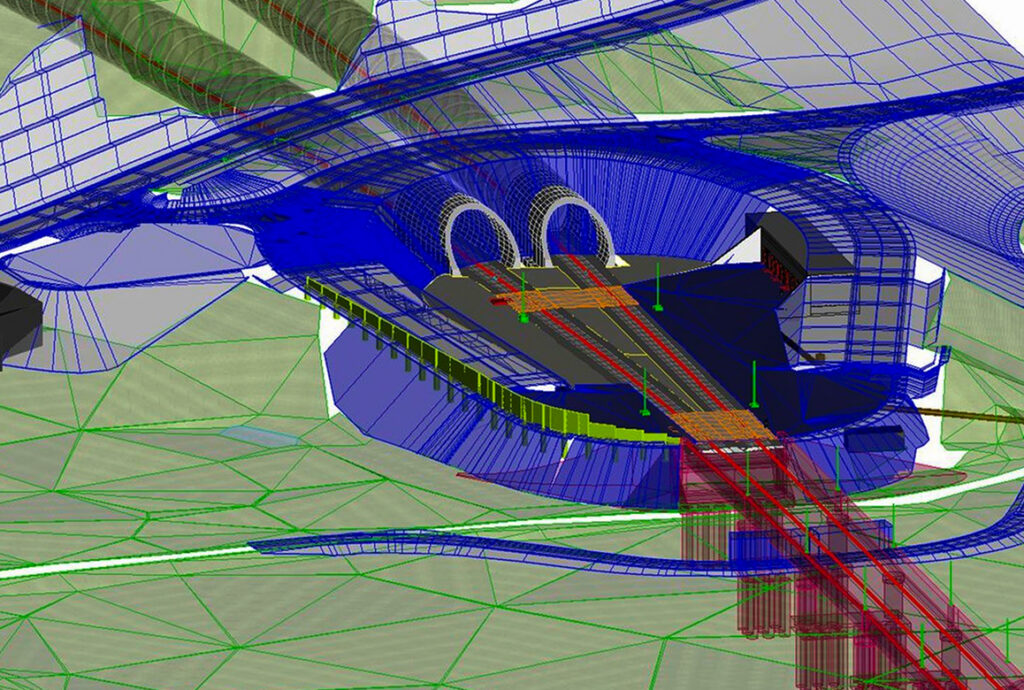
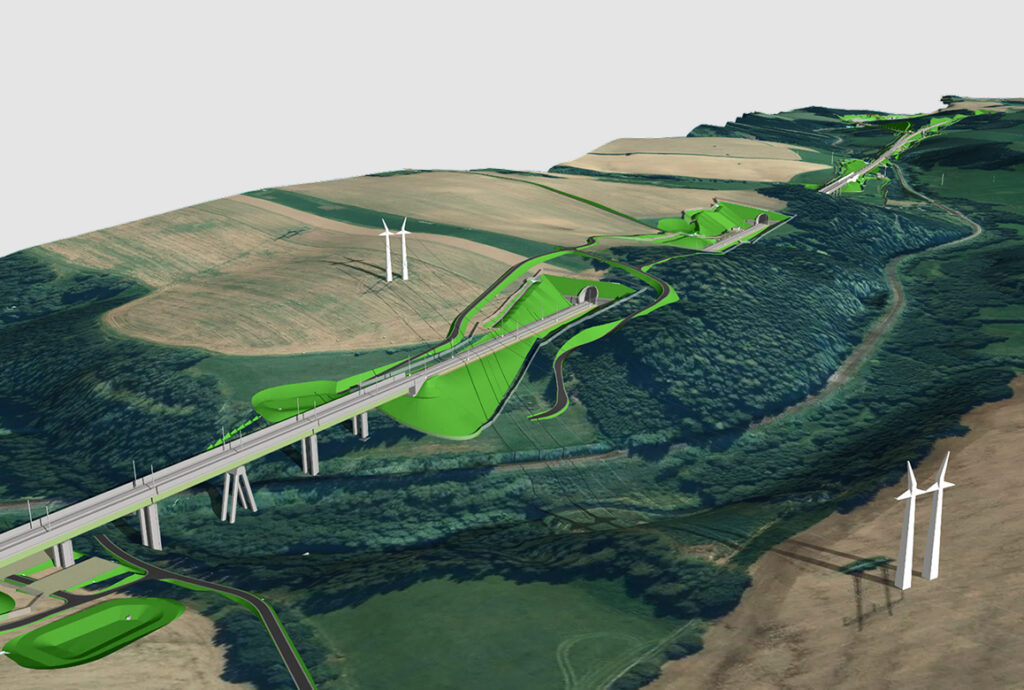
3D CAD rendering of a roller-coaster station with tunnels, red tracks and blue supports over a green terrain grid.

SUDOP PRAHA a.s.

Praha–Beroun Tunnel: Designing Czechia’s largest rail tunnel
Bridges and tunnels

Cities and facilities

  • What we’re looking for
– Demonstrate how your use of technology delivered measurable results in buildings, facilities, campuses, or cities, whether in planning, design, construction, operation, or mobility. We’re looking for real-world impact, not just technology adoption.  
  • Tools and technology
– Submissions should demonstrate use of Bentley applications, independently or combined with other software, across the project lifecycle. Eligible software includes OpenBuildings Designer, OpenBuildings GenerativeComponents, OpenBuildings Energy Simulator, OpenBuildings Station Designer, Bentley OpenPaths solutions (CityPhi, CUBE, Dynameq, and Emme), LEGION, Streetlytics, OpenCities Planner, iTwin Experience, iTwin Capture, and iTwin IoT.  
  • Innovation and differentiation
– Show what made your approach stand out. Consider: cross-team collaboration, interoperability across disciplines and stakeholders, connected digital workflows, and practices others can learn from.   
  • Outcomes and efficiency
– Detail how your project improved performance: process and workflow improvements, greater efficiency and effectiveness, application of industry good practice, and compliance with project or industry standards.   
  • Return on investment
– Provide quantified results: gains in productivity, efficiency, and quality, along with reduced time and cost, better risk management, improved safety, and stronger asset performance, reliability, or resilience.  
  • Sustainability and resilience
– Showcase impact on climate adaptation, disaster preparedness, energy savings, carbon reduction, improved resilience, quality of life, and mitigated risk.   
  • Submission requirements
– Include high-quality visuals: images, screenshots, models, simulations, animations, charts, and diagrams. Provide quantitative data where applicable. Show how digital twins and AI advanced project delivery or asset performance. 
Research Vice President, IDC
Head of Centre for Smart Cities and Infrastructure
Kaunas University of Technology
Chief Commercial Officer
City Innovation Network and the Airports AI Alliance

Construction

  • What we’re looking for
– Demonstrate how your use of technology delivered measurable results in construction planning and delivery through 4D modeling, project performance insights, and cost management workflows. 
  • Tools and technology
– Submissions should demonstrate use of Bentley applications, independently or combined with other software, across the project lifecycle. Eligible software includes SYNCHRO.  
  • Innovation and differentiation
– Show what made your approach stand out. Consider: multidiscipline 4D modeling, smarter planning and sequencing, improved coordination across teams, and workflows others can learn from.  
  • Outcomes and efficiency
– Detail how your project improved performance: better planning, stronger coordination, more efficient workflows, clearer project controls, and improved delivery confidence.   
  • Return on investment
– Provide quantified results: cost savings, time savings, productivity gains, reduced rework, and stronger risk management.   
  • Sustainability and resilience
– Showcase impact on climate adaptation, disaster preparedness, energy savings, carbon reduction, improved resilience, quality of life, and mitigated risk.  
  • Submission requirements
– Include high-quality visuals: images, screenshots, models, simulations, animations, charts, and diagrams. Provide quantitative data where applicable. Show how digital twins and AI advanced project delivery or asset performance. 
Digital Engineering Manager, National DE Systems
ACCIONA
President and Editorial Director, Specialty Publishing Media
Construction World
Research Vice President, Industrial Ecosystems, Engineering, & Product Innovation Strategies

Energy production

  • What we’re looking for
– Demonstrate how your use of technology delivered measurable results in energy production and process infrastructure, whether in planning, design, engineering, or operations. We’re looking for real-world impact, not just technology adoption.  
  • Tools and technology
– Submissions should demonstrate use of Bentley applications, independently or combined with other software, across the project lifecycle. Eligible software includes OpenPlant, iTwin, PlantSight, ProjectWise, AutoPIPE, SACS, MOSES, STAAD, MicroStation, SYNCHRO, AssetWise, and all Seequent products.  
  • Innovation and differentiation
– Show what made your approach stand out. Consider: digital twin adoption, improved visibility across complex assets, stronger collaboration across teams, and workflows that solved technical challenges others can learn from.  
  • Outcomes and efficiency
– Detail how your project improved performance: delivery of complex assets, resolution of difficult technical challenges, stronger coordination, more efficient workflows, and better engineering or operational outcomes.   
  • Return on investment
– Provide quantified results: cost savings across design, construction, maintenance, and energy performance, along with time savings, resource optimization, and stronger risk management.  
  • Sustainability and resilience
– Showcase impact on climate adaptation, disaster preparedness, energy savings, carbon reduction, improved resilience, quality of life, and mitigated risk.  
  • Submission requirements
– Include high-quality visuals: images, screenshots, models, simulations, animations, charts, and diagrams. Provide quantitative data where applicable. Show how digital twins and AI advanced project delivery or asset performance. 
Technology Evangelist
A Bit of This & That
President and Principal Analyst
Schnitger Corporation
Operations Director
Assystem
Senior Associate Advisor
IDC

Geospatial and reality modeling

  • What we’re looking for
– Demonstrate how your use of technology delivered measurable results through reality modeling, 3D geospatial modeling, mobile mapping, instrumentation, and sensor data management.  
  • Tools and technology
– Submissions should demonstrate use of Bentley applications, independently or combined with other software, across the project lifecycle. Eligible software includes Cesium and iTwin Capture.  
  • Innovation and differentiation
– Show what made your approach stand out. Consider: creative use of Cesium or iTwin Capture, strong visualization of complex assets, and workflows that helped teams understand, share, and act on infrastructure data.  
  • Outcomes and efficiency
– Detail how your project improved performance: the value of reality modeling and geospatial context, a clear workflow from data capture to actionable insight, and the use of AI or machine learning where relevant.  
  • Return on investment
– Provide quantified results: cost savings across design, construction, and maintenance, along with time savings, resource optimization, and stronger risk management.  
  • Sustainability and resilience
– Showcase impact on climate adaptation, disaster preparedness, energy savings, carbon reduction, improved resilience, quality of life, and mitigated risk.  
  • Submission requirements
– Include high-quality visuals: images, screenshots, models, simulations, animations, charts, and diagrams. Provide quantitative data where applicable. Show how digital twins and AI advanced project delivery or asset performance. 
Content Specialist
Geoweek news
Senior Deputy Director
Singapore Land authority
Vice President of Consulting
Geospatial World

Project delivery

  • What we’re looking for
– Demonstrate how your use of technology delivered measurable results through data management and automation that improved collaboration and efficiency across one or more phases of an infrastructure project.  
  • Tools and technology
– Submissions should demonstrate use of Bentley applications, independently or combined with other software, across the project lifecycle. Eligible software includes ProjectWise and SYNCHRO.  
  • Innovation and differentiation
– Show what made your approach stand out. Consider: stronger data management and collaboration, reduced resource hours and rework, fewer bottlenecks, and faster delivery than traditional project methods.  
  • Outcomes and efficiency
– Detail how your project improved performance: effective use of ProjectWise or SYNCHRO to create a common data environment, stronger cross-functional collaboration, digital workflow improvements, and automation that improved delivery.  
  • Return on investment
– Provide quantified results: cost savings, time savings, resource optimization, and stronger risk management.  
  • Sustainability and resilience
– Showcase impact on climate adaptation, disaster preparedness, energy savings, carbon reduction, improved resilience, quality of life, and mitigated risk.  
  • Submission requirements
– Include high-quality visuals: images, screenshots, models, simulations, animations, charts, and diagrams. Provide quantitative data where applicable. Show how digital twins and AI advanced project delivery or asset performance. 
Journalist
Create Magazine (Engineers Australia)
Technical Director – Digital Twin Lead / Transport & Infrastructure
WSP
AEC technology and communications consultant
PWcom

Rail and transit

  • What we’re looking for
– Demonstrate how your use of technology delivered measurable results in the planning, design and engineering of new rail assets, and the maintenance and upgrade of rail and transit networks.  
  • Tools and technology
– Submissions should demonstrate use of Bentley applications, independently or combined with other software, across the project lifecycle. Eligible software includes AssetWise, iTwin, OpenBridge, OpenBuildings, OpenRail, OpenRoads, PLAXIS, ProjectWise, MicroStation, and SYNCHRO.  
  • Innovation and differentiation
– Show what made your approach stand out. Consider: integrated use of Bentley software across project delivery, strong application of rail engineering principles and standards, and effective use of digital models for design, analysis, drawing production, monitoring, and reporting.  
  • Outcomes and efficiency
– Detail how your project improved performance: higher productivity, more sustainable construction methods, greater operational reliability, and digital twin workflows that automated delivery through interoperability, APIs, and integration with BIM or other technologies.   
  • Return on investment
– Provide quantified results: cost savings, time savings, resource optimization, and risk management.   
  • Sustainability and resilience
– Showcase impact on climate adaptation, disaster preparedness, energy savings, carbon reduction, improved resilience, quality of life, and mitigated risk.   
  • Submission requirements
– Include high-quality visuals: images, screenshots, models, simulations, animations, charts, and diagrams. Provide quantitative data where applicable. Show how digital twins and AI advanced project delivery or asset performance. 
Deputy Editor, Infrastructure
ENR
Researcher, Editor, Writer, Faciliator Consultant
Industry Analyst
Verdantix

Roads and highways

  • What we’re looking for
– Demonstrate how your use of technology delivered measurable results in the planning, design, and engineering of new road assets and the maintenance and inspection of road and highway networks.  
  • Tools and technology
– Submissions should demonstrate use of Bentley applications, independently or combined with other software, across the project lifecycle. Eligible software includes OpenRoads, Bentley LumenRT, iTwin Capture, SYNCHRO, ProjectWise, MicroStation, iTwin, AssetWise, and SUPERLOAD.  
  • Innovation and differentiation
– Show what made your approach stand out. Consider: complex challenges, inventive solutions, techniques that go beyond standard practice, adaptable methods tailored to project constraints, and approaches others can learn from.  
  • Outcomes and efficiency
– Detail how your project improved performance: stronger workflows and outcomes through interoperability and integration, connected data across phases and disciplines, better access and consistency for stakeholders, and greater efficiency in project delivery.  
  • Return on investment
– Provide quantified results: cost savings, time savings, resource optimization, and risk management.  
  • Sustainability and resilience
– Showcase impact on climate adaptation, disaster preparedness, energy savings, carbon reduction, improved resilience, quality of life, and mitigated risk.  
  • Submission requirements
– Include high-quality visuals: images, screenshots, models, simulations, animations, charts, and diagrams. Provide quantitative data where applicable. Show how digital twins and AI advanced project delivery or asset performance. 
Digital Delivery Lead
HNTB
Head of Content (Press)
Roads and Bridges Media
Vice President & Head – EDRC
Larsen & Toubro Limited
Senior Vice-President
WSP

Structural engineering

  • What we’re looking for
– Demonstrate how your use of technology delivered measurable results in planning, modeling, designing, analyzing, documenting, and detailing high-quality structures, platforms, and foundations.  
  • Tools and technology
– Submissions should demonstrate use of Bentley applications, independently or combined with other software, across the project lifecycle. Eligible software includes STAAD, RAM, SACS, MOSES, ADINA, and AutoPIPE.  
  • Innovation and differentiation
– Show what made your approach stand out. Consider: complex planning, design, or construction challenges, inventive solutions under exceptional constraints, creative problem-solving, and advanced use of Bentley applications to model, analyze, design, document, or detail structures.  
  • Outcomes and efficiency
– Detail how your project improved performance: effective use of structural or mechanical engineering applications for analysis, design, and drawing development, along with advanced features that automated workflows and modernized deliver. 
  • Return on investment
– Provide quantified results: cost savings, time savings, resource optimization and risk management.   
  • Sustainability and resilience
– Showcase impact on climate adaptation, disaster preparedness, energy savings, carbon reduction, improved resilience, quality of life, and mitigated risk.   
  • Submission requirements
– Include high-quality visuals: images, screenshots, models, simulations, animations, charts, and diagrams. Provide quantitative data where applicable. Show how digital twins and AI advanced project delivery or asset performance. 
Senior Principal Engineer
Magnusson Klemencic Associates
Group Publisher
V1 Media
Analyst
Verdantix

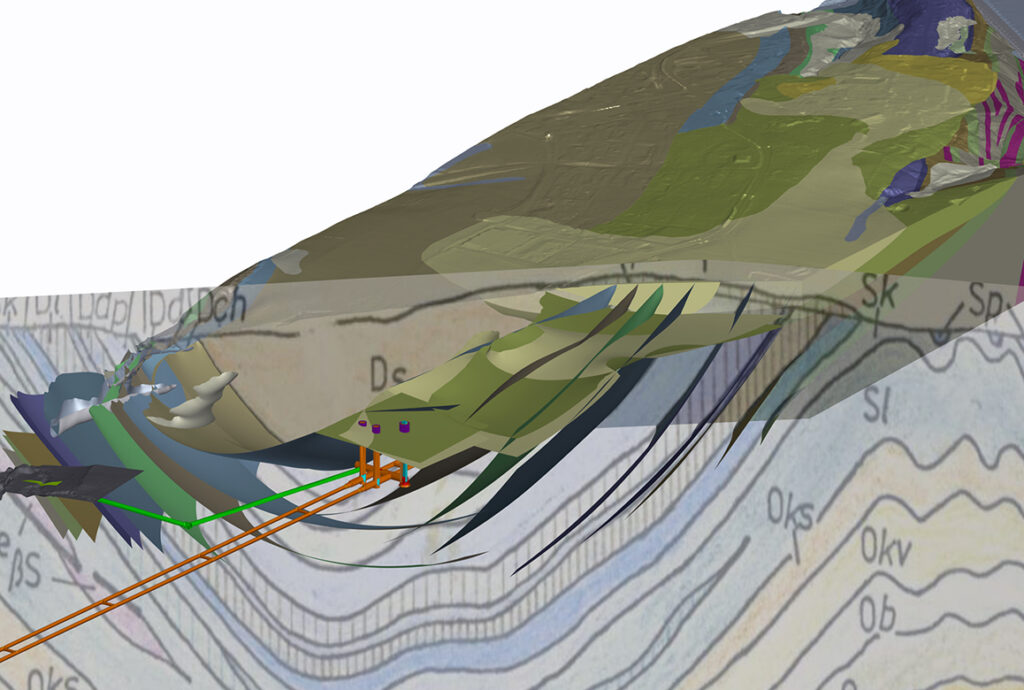
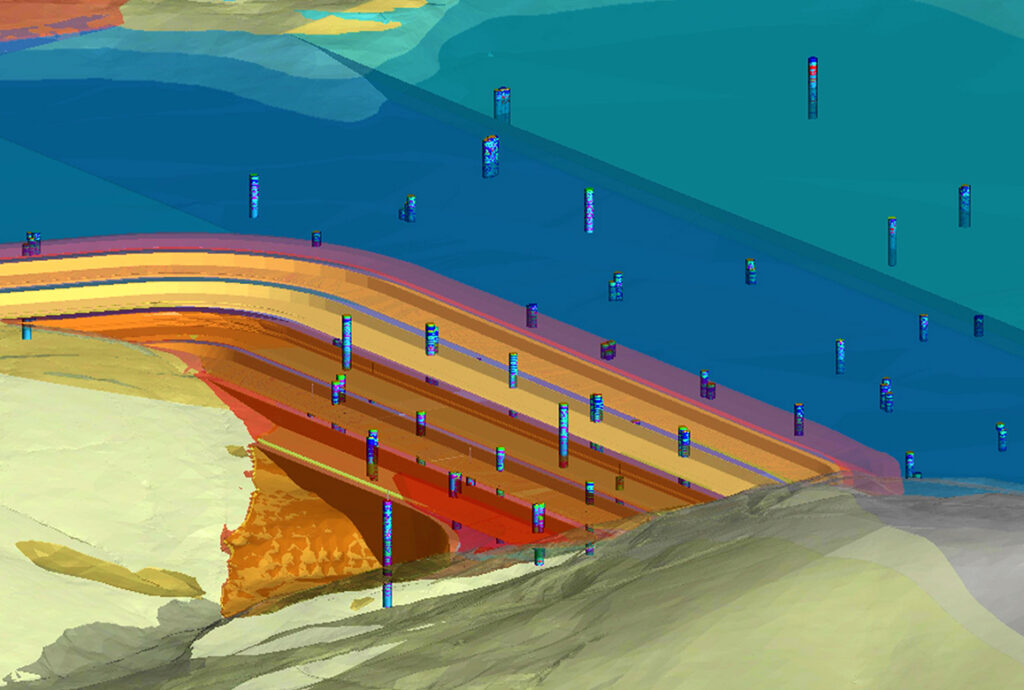
Subsurface modeling and analysis

  • What we’re looking for
– Demonstrate how your use of technology delivered measurable results in understanding underground engineering or subsurface challenges through modeling and analysis.  
  • Tools and technology
– Submissions should demonstrate use of Seequent applications, independently or combined with other software, across the project lifecycle. Eligible software includes Seequent Central, OpenGround, MX Deposit, Imago, Leapfrog Works, Leapfrog Geo, Leapfrog Energy, Oasis montaj, Aarhus GeoSoftware, PLAXIS, Volsung, and GeoStudio  
  • Innovation and differentiation
– Show what made your approach stand out. Consider: insightful use of project data, strong interpretation that led to clear decisions, inventive problem-solving, and effective use of Seequent or Bentley applications to advance the project.  
  • Outcomes and efficiency
– Detail how your project improved performance: digital workflows that connected earlier-stage data to the broader project, stronger communication and collaboration across stakeholders, clearer reporting and visualization, and reduced siloes.  
  • Return on investment
– Provide quantified results: cost savings, time savings, resource optimization, and risk management.  
  • Sustainability and resilience
– Showcase impact on climate adaptation, disaster preparedness, energy savings, carbon reduction, improved resilience, quality of life, and mitigated risk.  
  • Submission requirements
– Include high-quality visuals: images, screenshots, models, simulations, animations, charts, and diagrams. Provide quantitative data where applicable. Show how digital twins and AI advanced project delivery or asset performance. 
General Manager – Geotechnical & Survey
Beca
Reader in Geomechanical Modelling
Imperial College

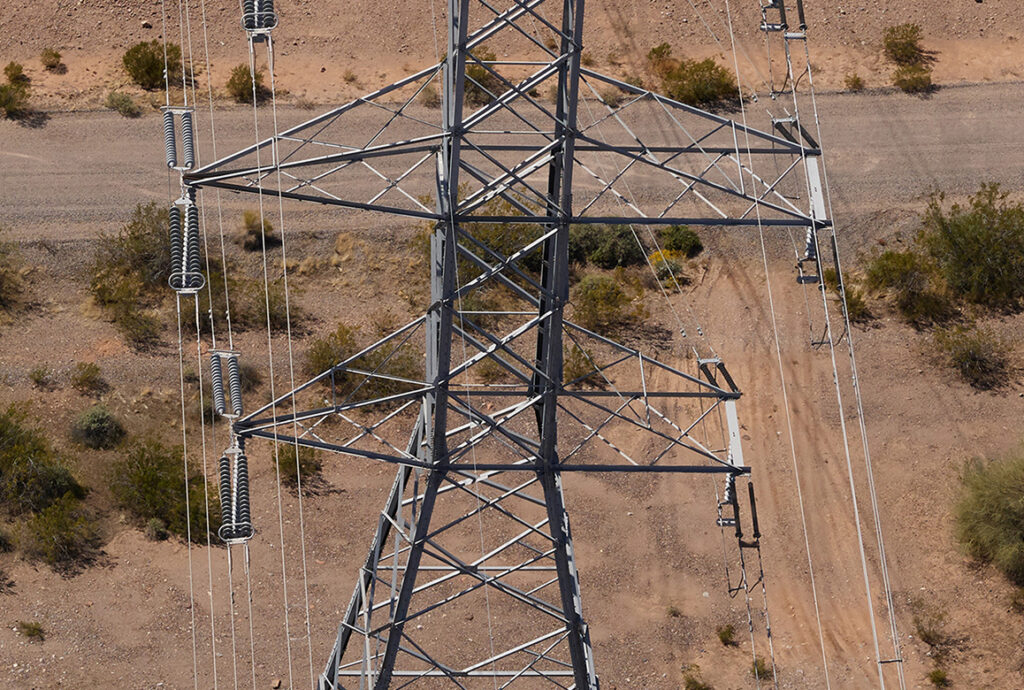
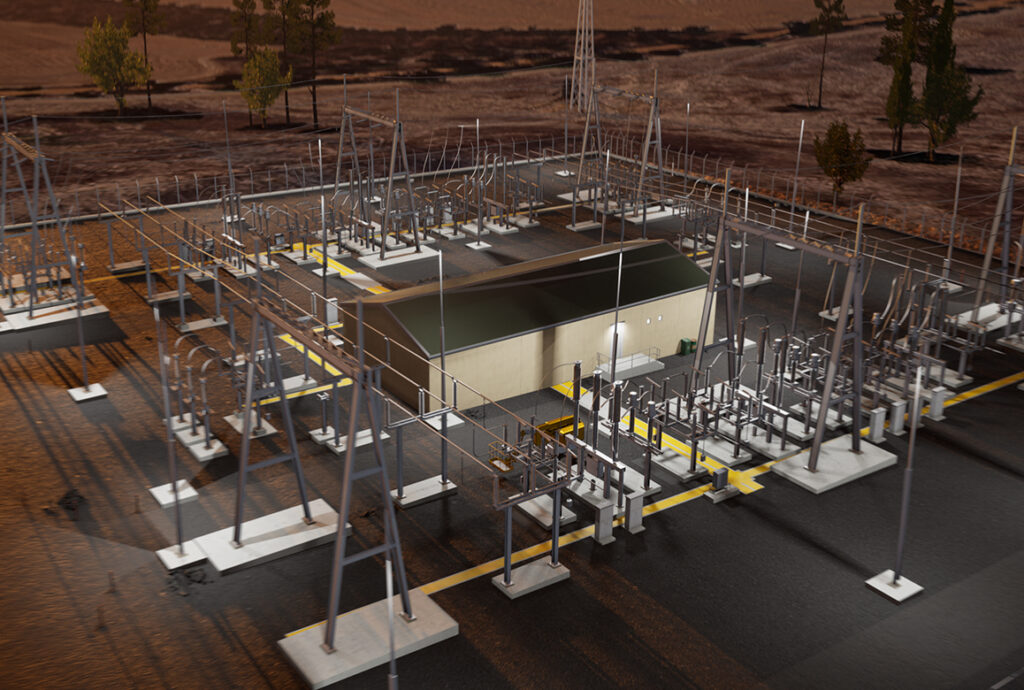
Transmission and distribution

  • What we’re looking for
– Demonstrate how your use of technology delivered measurable results in the planning, design, analysis, or operations of network systems.  
  • Tools and technology
– Submissions should demonstrate use of Bentley applications, independently or combined with other software, across the project lifecycle. Eligible software includes OpenUtilities, Power Line Systems products, SPIDA, EasyPower, OpenComms, OpenTower, iTwin, ProjectWise, and MicroStation.  
  • Innovation and differentiation
– Show what made your approach stand out. Consider: difficult technical challenges, inventive solutions, and effective interoperability across Bentley applications or external enterprise systems.  
  • Outcomes and efficiency
– Detail how your project improved performance: stronger project quality through more effective information and data management.   
  • Return on investment
– Provide quantified results: cost savings, time savings, resource optimization, and risk management.  
  • Sustainability and resilience
– Showcase impact on climate adaptation, disaster preparedness, energy savings, carbon reduction, improved resilience, quality of life, and mitigated risk.  
  • Submission requirements
– Include high-quality visuals: images, screenshots, models, simulations, animations, charts, and diagrams. Provide quantitative data where applicable. Show how digital twins and AI advanced project delivery or asset performance. 
Design Technology Director
Burns and McDonnell
Analyst – Research Director & General Manager
ARC Advisory Group
Press – Editor in Chief
Electric Energy | T&D Magazine

Water and wastewater

  • What we’re looking for
– Demonstrate how your use of technology delivered measurable results in planning, design, construction, operation, or maintenance of water infrastructure.  
  • Tools and technology
– Submissions should demonstrate use of Bentley applications, independently or combined with other software, across the project lifecycle. Eligible software includes OpenFlows, iTwin, OpenPlant, STAAD, PLAXIS, OpenRoads, SYNCHRO, ProjectWise, and AssetWise. Campus, facility, or city-scale submissions may also include OpenCities Planner, iTwin Experience, iTwin Capture, and iTwin IoT.  
  • Innovation and differentiation
– Show what made your approach stand out. Consider: smart management practices, digital twin adoption, cross-sector interoperability, and digital-first workflows that others can learn from.  
  • Outcomes and efficiency
– Detail how your project improved performance: collaboration across teams, workflow improvements through digitalization, data integration, and solutions to workforce challenges.   
  • Return on investment
– Provide quantified results: cost savings, time savings, resource optimization, and risk management.   
  • Sustainability and resilience
– Showcase impact on climate adaptation, disaster preparedness, energy savings, carbon reduction, improved resilience, quality of life, and mitigated risk.  
  • Submission requirements
– Include high-quality visuals: images, screenshots, models, simulations, animations, charts, and diagrams. Provide quantitative data where applicable. Show how digital twins and AI advanced project delivery or asset performance. 
Press
Smart Water Magazine and iAgua
Management Consultant
Arcadis
Analyst
Bluefield Research